Scenarios & Selection
Chapter 3 — Eight real-world application scenarios with site-specific design requirements, camera selection criteria, and key technical specifications
3.1 Scenario Overview
IK10 vandal-resistant surveillance systems are deployed across a wide range of environments, each presenting distinct threat profiles, environmental conditions, and operational constraints. This chapter presents eight representative application scenarios, each with a real-world installation photograph, detailed description of the site-specific challenges, recommended design approach, and key technical indicators that define acceptance criteria.
The selection of camera type, mounting method, cabling approach, and alarm linkage strategy must be tailored to the specific characteristics of each scenario. The scenarios below are organized from highest to lowest adversarial threat level, reflecting the escalating requirements for physical protection, redundancy, and response speed.
| Scenario | Threat Level | Primary Risk | Key Design Priority |
|---|---|---|---|
| Metro Station Platform | High | Impact, occlusion, cable pull | High mount + panoramic + anti-pull conduit |
| Underground Tunnel / Passage | High | Spray paint, impact, cable cut | Caged housing + anti-spray coating + strobe linkage |
| Detention / Custody Facility | Very High | Dismantling, ligature, occlusion | Flush mount + anti-ligature + dual camera |
| School Entrance / Critical Area | Medium-High | Impact, re-aiming, occlusion | High mount + face-capture bullet + privacy mask |
| Hospital Emergency Room | Medium-High | Impact, occlusion, patient privacy | Anti-ligature + intercom linkage + privacy masking |
| Night-Economy Street | High | Impact, spray, cable pull at night | High mount + supplemental lighting + strobe |
| Construction Site Entrance | Medium | Theft, dust, temporary power | Solar/battery + IP67 + mobile mast |
| Underground Parking Garage | Medium-High | Impact, low light, cable access | Caged dome + LPR + emergency call station |
3.2 Application Scenarios
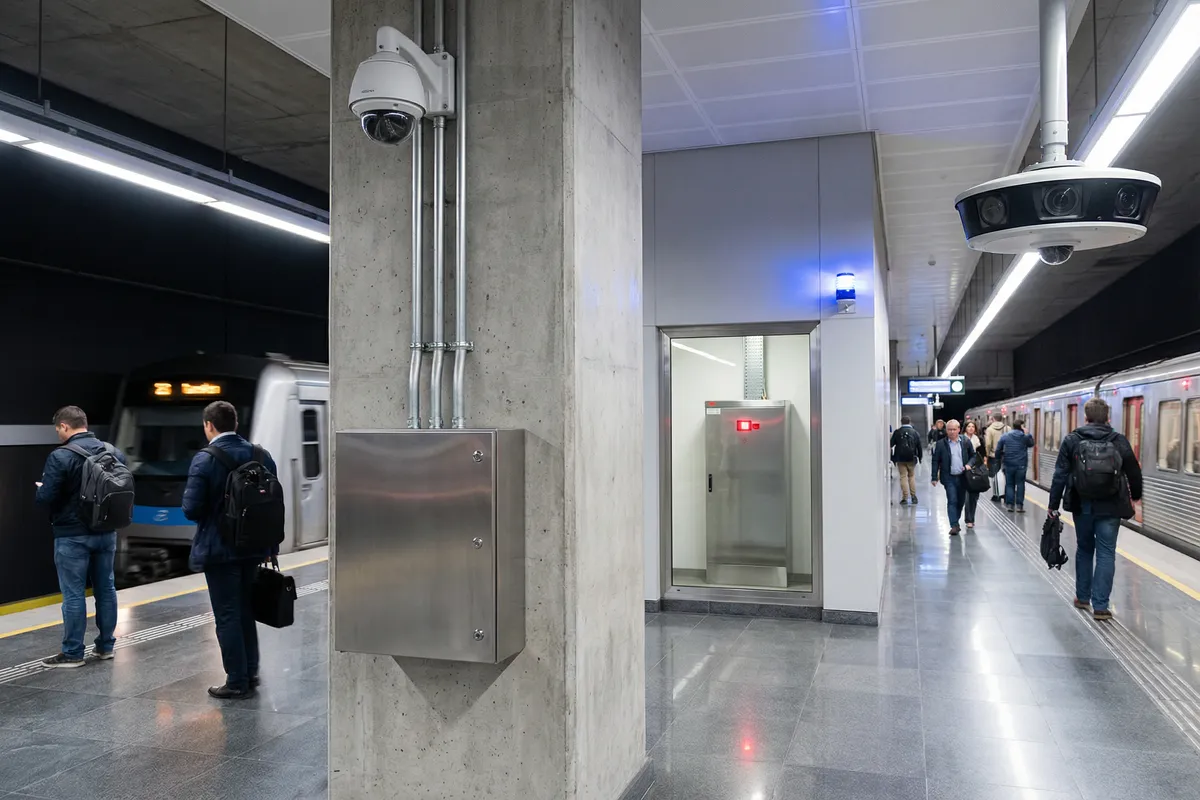
Metro station platforms present one of the most demanding environments for vandal-resistant surveillance. High passenger density, 24/7 operation, and the presence of intoxicated or aggressive individuals create frequent tamper events. The combination of vibration from passing trains, humidity, and the need for continuous recording without gaps makes this scenario a benchmark for IK10 system design. Cameras must withstand impact from thrown objects, resist cable pull, and maintain recording continuity even during network disruptions.
The recommended deployment combines a high-mounted IK10 dome camera (3.5–4.0 m on structural columns) with a ceiling-mounted panoramic multi-sensor camera at platform ends. All cables run inside metal conduit to locked stainless steel junction boxes. A blue LED strobe and voice announcement system provide immediate deterrence when tamper events are detected. Edge SD card recording provides local backup during network disruptions.
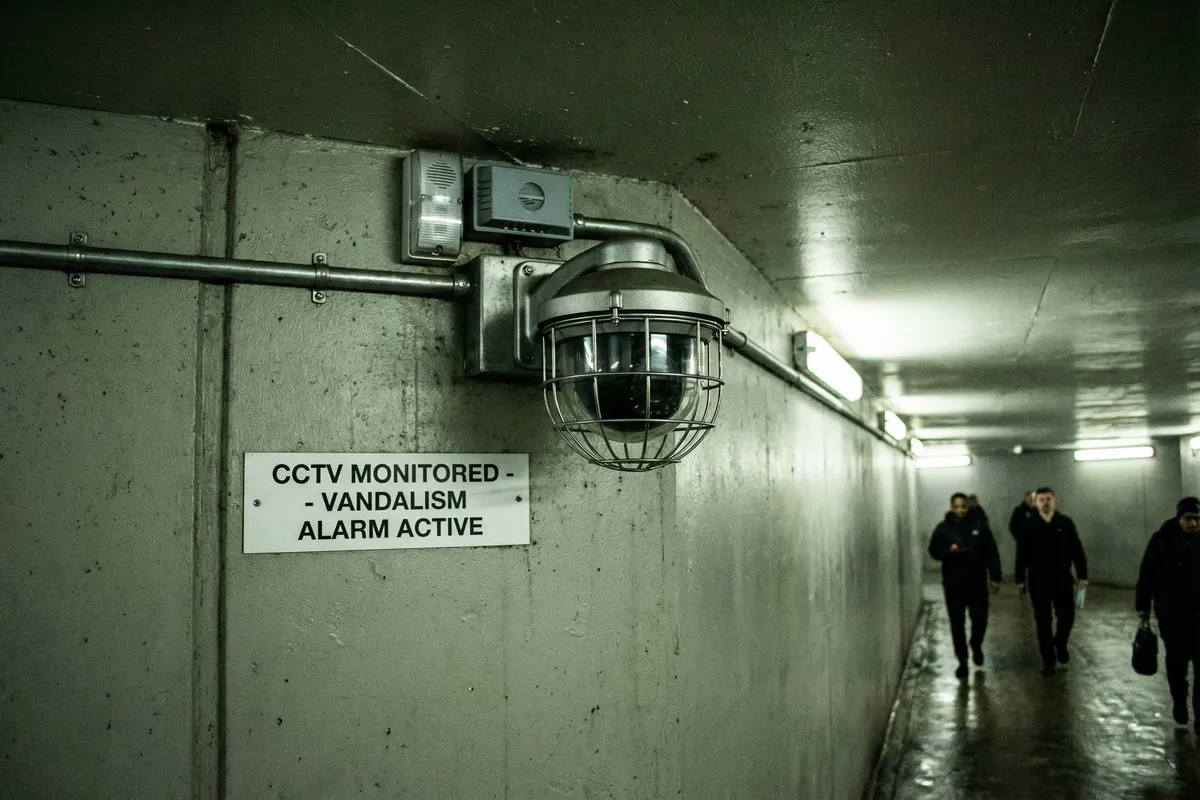
Underground pedestrian tunnels and subways are high-risk environments for vandalism, including spray painting, impact damage, and cable tampering. The enclosed nature of these spaces means that attackers have more time and privacy to act, making rapid alarm response critical. The combination of humidity, temperature variation, and the need for effective night-time imaging in low-light conditions adds to the technical complexity.
The recommended approach uses IK10 cameras with protective metal cages and replaceable transparent lens covers. Anti-spray coatings on the housing reduce the effectiveness of paint attacks. Metal cable trunking with anti-tamper screws runs along the wall. Strobe/siren deterrence devices are mounted above cameras. Warning signage stating "CCTV MONITORED — VANDALISM ALARM ACTIVE" provides psychological deterrence. Cross-coverage from cameras at both tunnel ends ensures no blind zones.
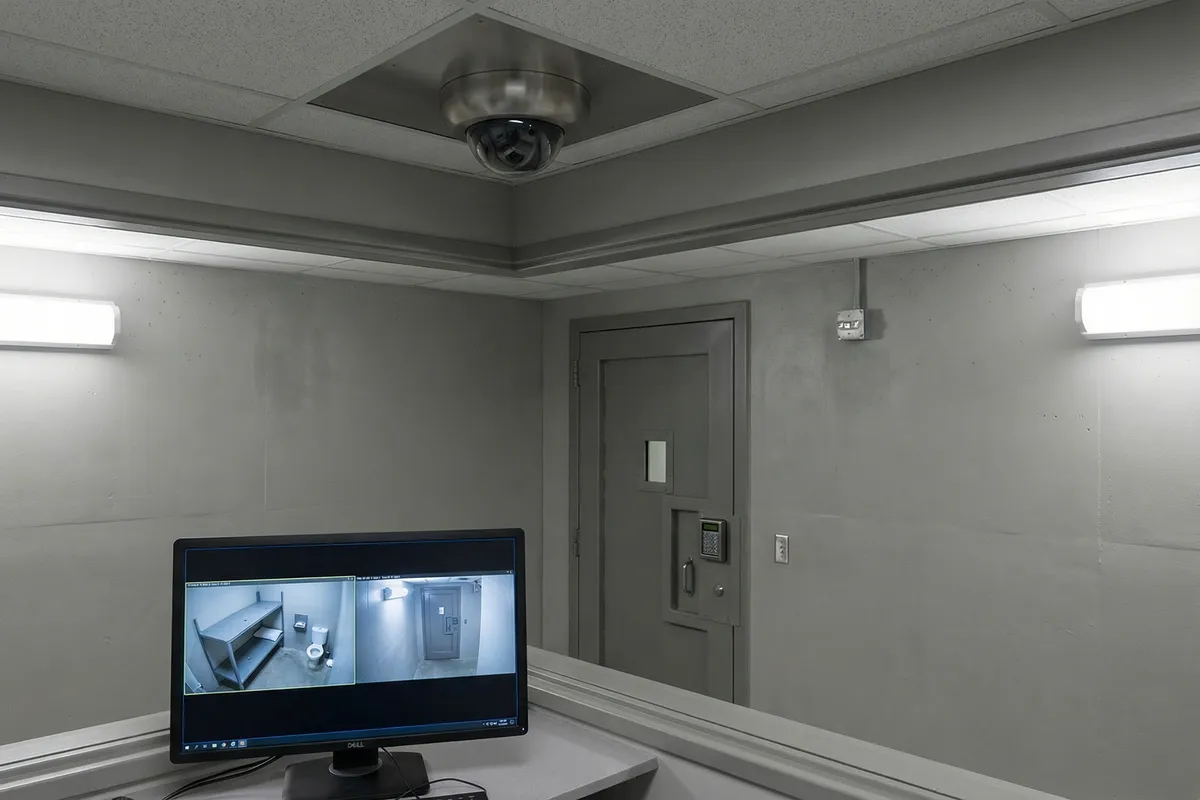
Detention and custody facilities represent the most demanding environment for anti-vandal surveillance. Detainees may attempt to dismantle, occlude, or use cameras as ligature points. All camera housings must be anti-ligature (no protruding parts), flush-mounted, and fully concealed within the wall or ceiling structure. The system must maintain continuous recording with no gaps, as footage is frequently required as legal evidence.
The recommended design uses flush-mounted IK10 dome cameras with smooth rounded housings and no exposed screws or protrusions. All cabling is completely concealed within the wall structure. Dual camera angles (overview + close-up) are required for each cell or room. The control room monitors all feeds simultaneously with instant alarm pop-up for any tamper event. Evidence export requires supervisor authorization with full audit logging.
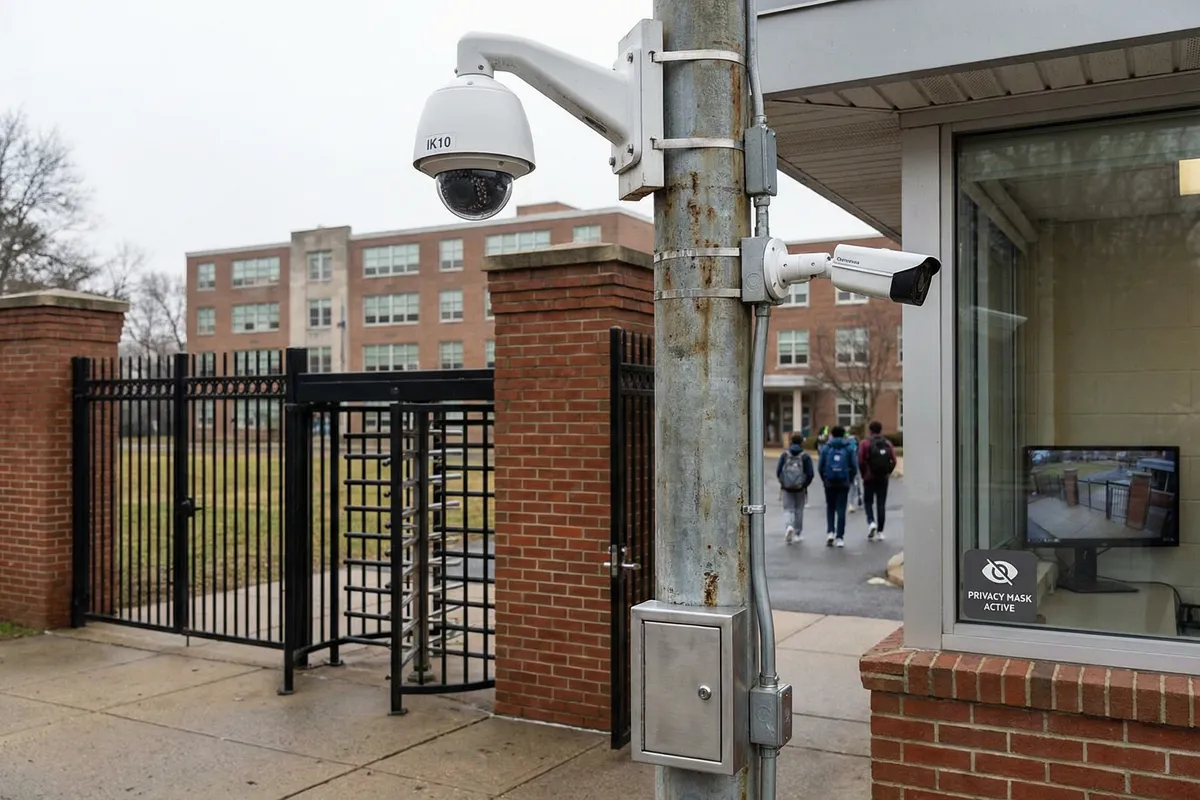
School entrances and critical areas such as corridors, stairwells, and locker areas require a balance between effective surveillance and student privacy. Cameras must be positioned to capture face-level identification at entry points while avoiding unnecessary monitoring of private areas. The system must comply with relevant privacy regulations and include clear signage. Vandalism by students typically involves spray paint, stickers, or physical impact, requiring IK10 protection at reachable heights.
The recommended design uses a high-mounted IK10 dome camera (4.0–4.5 m on a pole) for overview coverage, combined with a lower-mounted bullet camera for face capture at the entrance gate. Privacy masking is applied to areas outside the school boundary. All cables run inside the pole to a locked base cabinet. The system integrates with the school's access control and PA system for immediate response to tamper events during school hours.
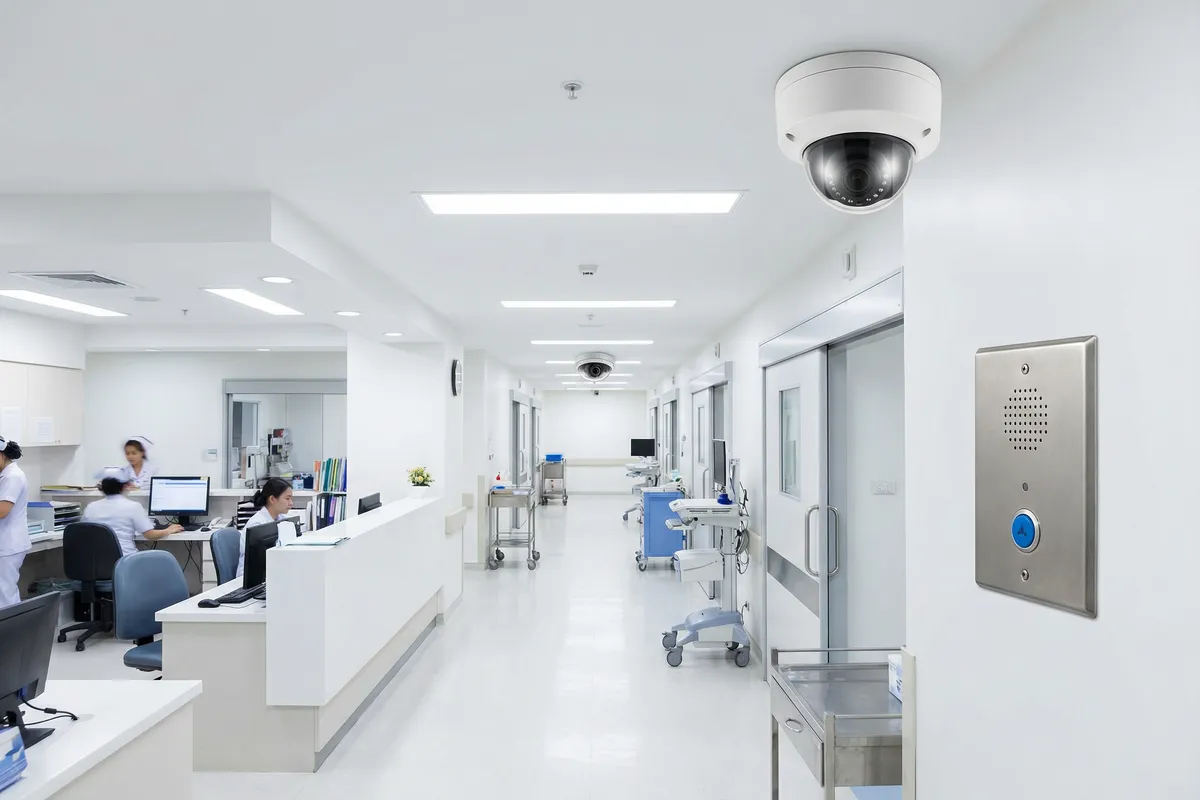
Hospital emergency rooms and psychiatric units face unique challenges combining high-risk patient behavior with strict privacy and clinical environment requirements. Cameras must be anti-ligature, positioned to avoid patient dignity violations, and integrated with the nurse call and intercom systems. The clinical environment requires cameras with no sharp edges, smooth surfaces, and easy-clean housings. Tamper events must trigger immediate staff response rather than external alarms.
The recommended design uses ceiling-mounted IK10 dome cameras with anti-ligature housings and no exposed mounting hardware. An intercom/call panel is positioned nearby for patient communication. Panoramic cameras at corridor ends provide wide-area overview. Privacy masking is applied to patient bed areas. The system integrates with the nurse call system so tamper events generate immediate alerts at the nursing station rather than audible alarms that could disturb patients.
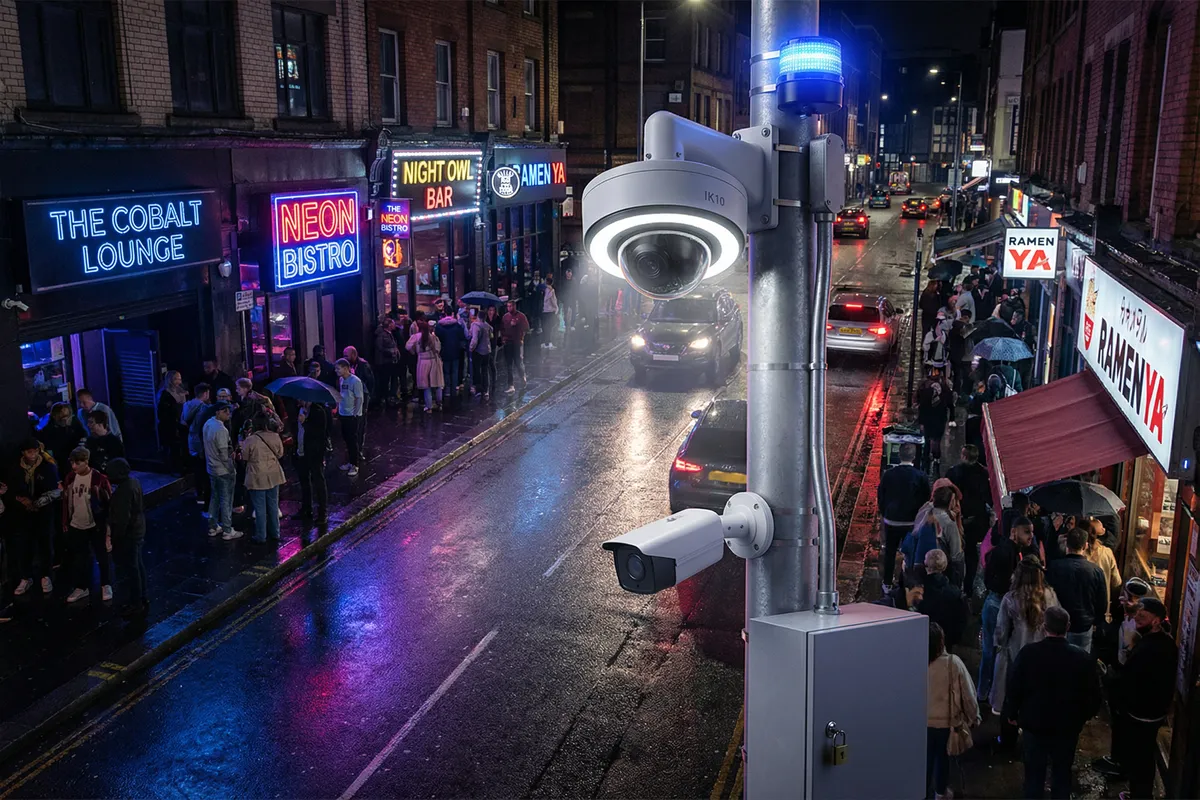
Night-economy streets with bars, restaurants, and entertainment venues experience peak vandalism risk during late-night hours when intoxicated individuals may target cameras. The combination of high ambient noise, dynamic lighting from neon signs, and the need for face identification in low-light conditions makes this one of the most technically demanding outdoor scenarios. Cameras must handle extreme WDR conditions (bright neon signs vs. dark alleys) while maintaining identification quality.
The recommended design uses a high-mounted IK10 dome camera (4.0–5.0 m) with an integrated white LED supplemental lighting ring for face illumination, combined with a lower bullet camera for face capture. A blue strobe light provides immediate visual deterrence when tamper events are detected. All cables run inside the pole to a locked base cabinet. The system integrates with local police dispatch for rapid response during peak hours.
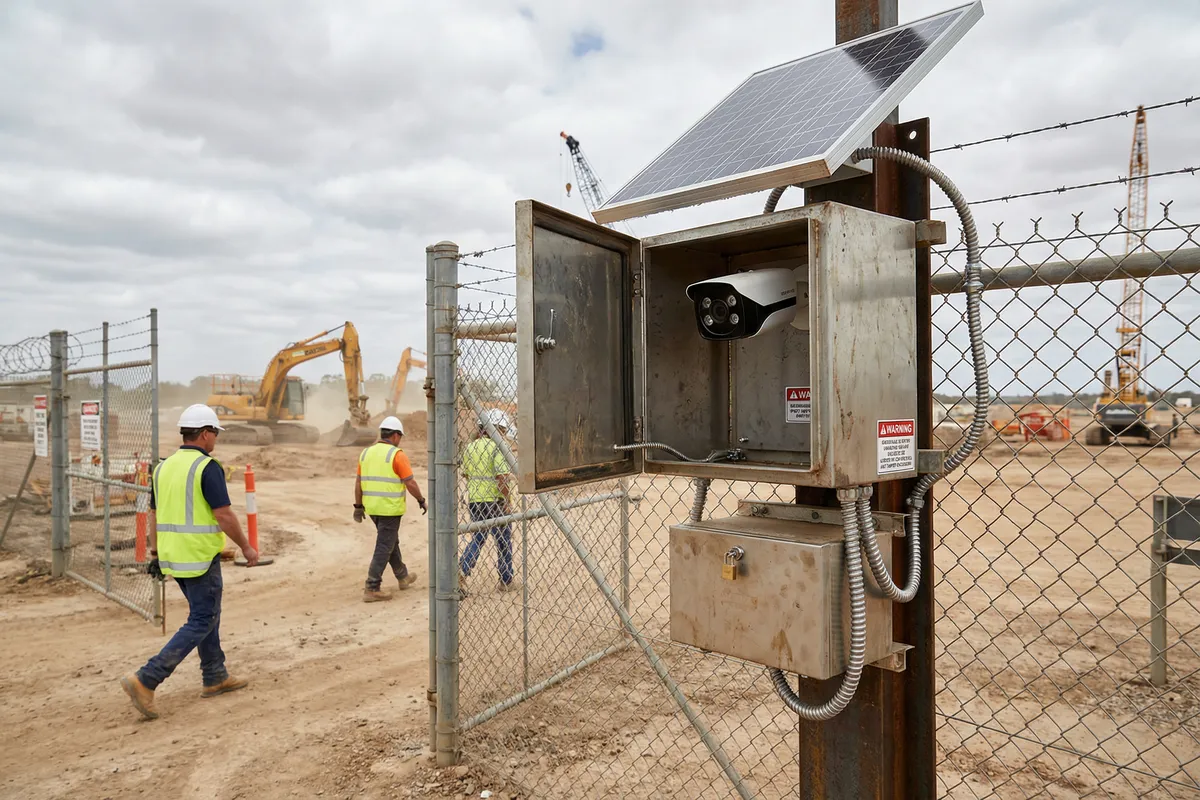
Construction sites present unique challenges for surveillance due to their temporary nature, lack of permanent power and network infrastructure, extreme dust and vibration environments, and the risk of equipment theft. Cameras must operate reliably on solar/battery power, withstand heavy dust and vibration from construction machinery, and be easily relocated as the site evolves. The threat profile includes both external vandalism and internal theft by workers.
The recommended design uses solar-powered IK10 cameras in anti-tamper metal enclosures mounted on fence posts or portable masts. Battery backup provides 48–72 hours of operation without sunlight. 4G/LTE connectivity eliminates the need for fixed network infrastructure. The camera and power unit are housed in a locked metal enclosure with tamper switch. Dust-resistant IP67 rating and vibration-tolerant mounting ensure reliable operation in the construction environment.
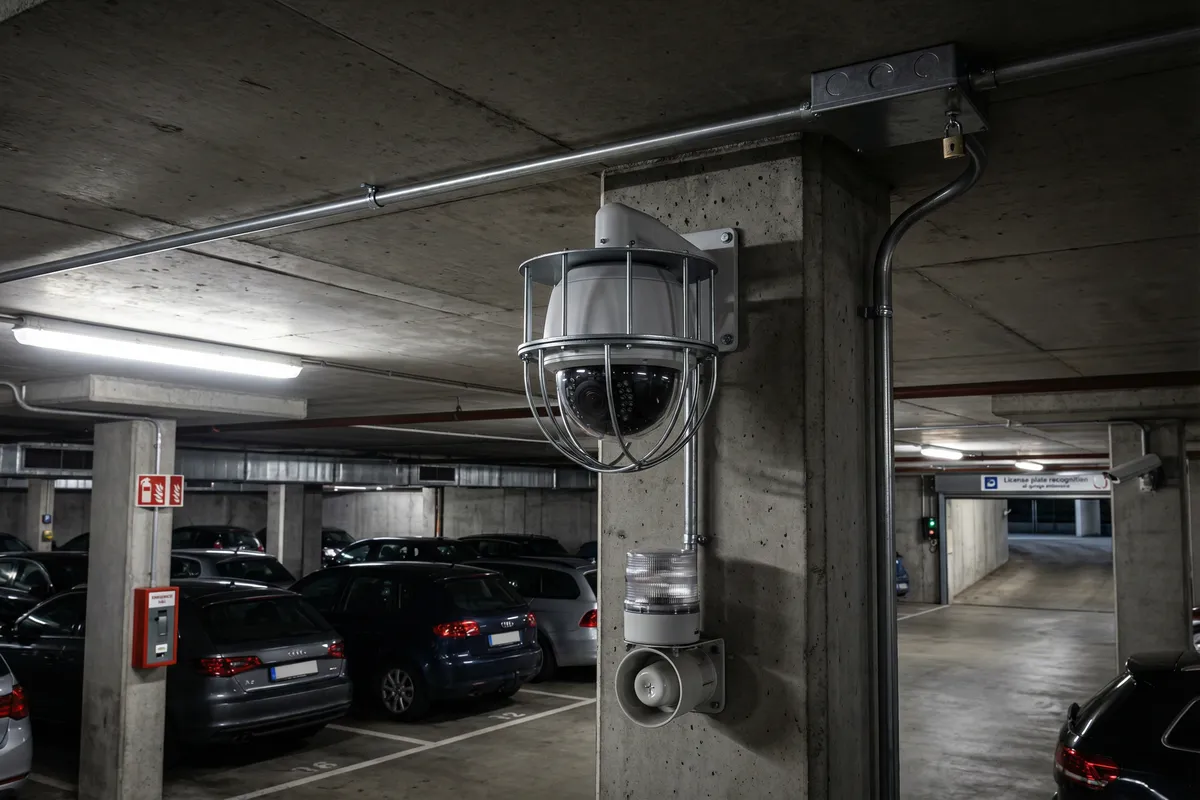
Underground parking garages combine low-light conditions, limited ceiling height (often 2.4–2.8 m), high vehicle density, and significant risk of personal assault and vehicle theft. Cameras must be protected against impact from vehicles and deliberate vandalism, while providing sufficient resolution for license plate recognition and face identification. The low ceiling height means cameras are often within reach, requiring protective cages and anti-tamper mounts.
The recommended design uses column-mounted IK10 dome cameras with protective metal cages at 2.8–3.2 m height. A strobe light and siren are mounted on the same column for immediate deterrence. License plate recognition cameras are installed at all entry/exit points. Emergency call stations are positioned at regular intervals. All cables run in metal conduit along the ceiling to locked junction boxes. The system integrates with the parking management system for access control and incident response.
3.3 Scenario-Based Selection Matrix
The following matrix provides a consolidated reference for selecting the appropriate camera type, mounting method, cabling approach, and alarm linkage strategy based on the specific characteristics of each scenario. This matrix should be used in conjunction with the detailed scenario descriptions above and the design decision tree in Chapter 2.
| Scenario | Camera | Mount | Cabling | Alarm Linkage | Special Requirement |
|---|---|---|---|---|---|
| Metro Platform | IK10 Dome + Panoramic | Column, 3.5–4.0 m | Metal conduit + SS junction box | Strobe + voice + dispatch | SD card local backup |
| Underground Tunnel | IK10 + Metal Cage | Wall corner, 2.8–3.5 m | Metal trunking, anti-tamper screws | Strobe + siren + voice | Anti-spray coating |
| Detention Facility | Anti-ligature Flush IK10 | Flush ceiling, no protrusions | 100% concealed in wall | Silent to control room | Dual angle per room |
| School Entrance | IK10 Dome + Bullet | Pole, 4.0–4.5 m | Inside pole, locked base | PA system integration | Privacy masking |
| Hospital ER | Anti-ligature IK10 Dome | Ceiling, no sharp edges | Concealed in ceiling | Silent nurse call alert | HIPAA compliance |
| Night Street | IK10 Dome + Bullet | Pole, 4.0–5.0 m | Inside pole, locked base | Blue strobe + police CAD | Integrated LED ring |
| Construction Site | IK10 Bullet in Metal Box | Fence post / portable mast | Inside enclosure | 4G alert + cloud backup | Solar + battery power |
| Parking Garage | IK10 Dome + Cage + LPR | Column, 2.8–3.2 m | Metal conduit, ceiling route | Strobe + siren + parking mgmt | Emergency call stations |